U2 sang, “Where the Streets Have No Name,” but how about a named street that isn’t physically there? Could it be considered a ghost street?
For the most part, the streets of Manhattan are arranged on a logical north/south and east/west grid…with exceptions. Lower Manhattan is comprised of mazes of streets, a result of quick and haphazard expansion from massive influxes of immigration without any organized plan. There are hidden tunnels and secret passages throughout New York, such as under Rockefeller Center and the Freedom Tunnel, that were once used either for secrecy or for subways. There are also unnamed, gated alleys in SoHo and Greenwich Village that once provided commercial access to the surrounding industrial buildings and today serve as the exclusive back doors and parking spots for their upper class residents. Finally, there are streets that have disappeared from New York and are no longer included on current maps, continuing to exist only in our memories.
As interesting as each of these exceptions are, I am referring to something completely different: the existence of official signs for streets that don’t exist. Only they do, sort of. And I have found two of them worth exploring: Extra Place and 6 ½ Avenue.
*
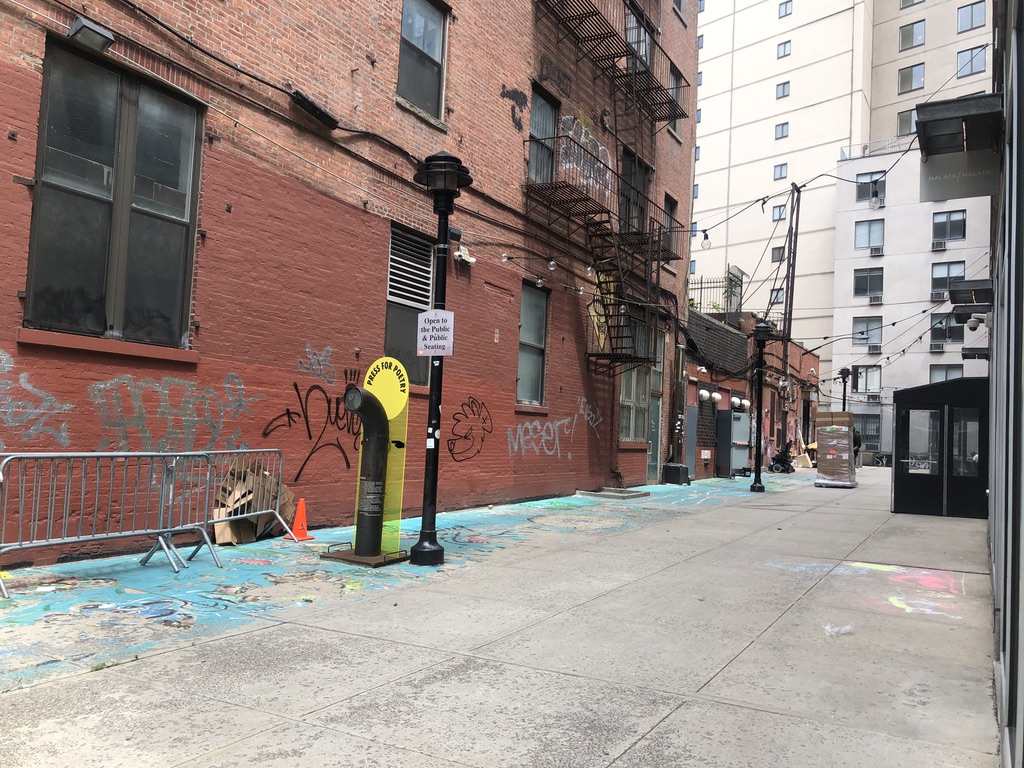
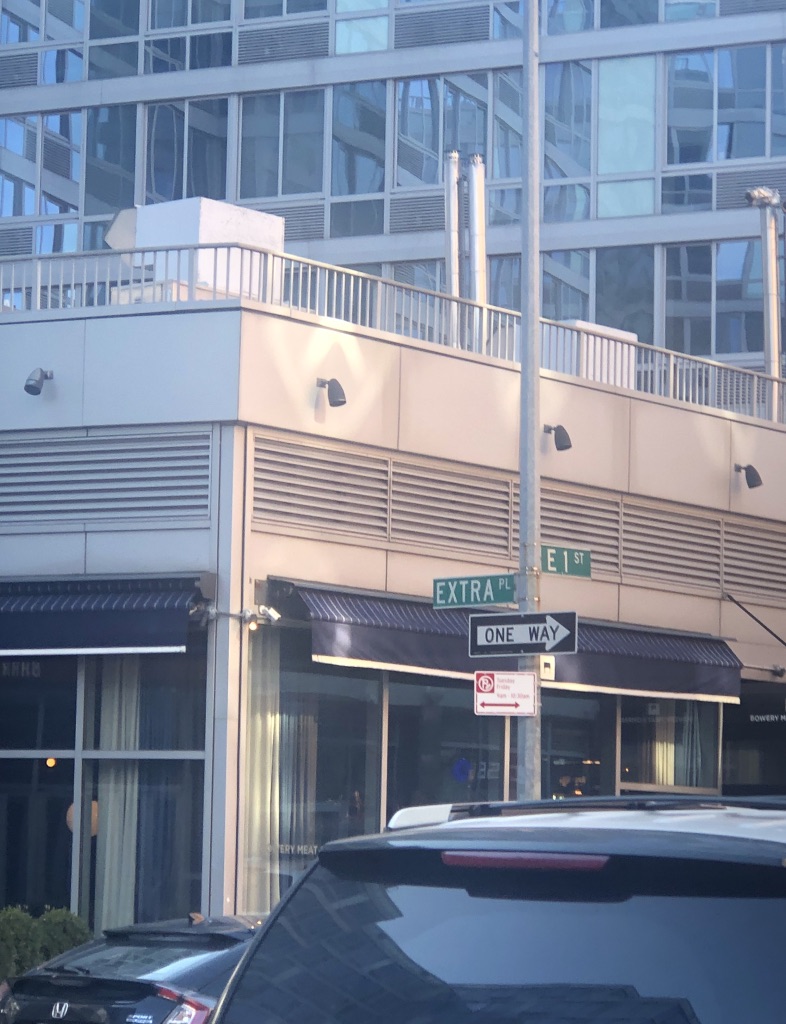
One day, while on one of my many treks through the city, I came upon a dead-end street in the East Village off East First Street, just a half block east of the Bowery, called Extra Place. As a search of Google Maps will confirm, it is an official street. However, there is no street.
The north side is a wide alley that runs behind the building where CBGBs use to be. It is a pedestrian area open to the public. Graffiti adorns the walls and sidewalk. Lampposts provide light at night for the drunks who stumble in. A kiosk can be activated to play poetry. Extra Place is a homage to the East Village’s role in the Beat and Neo-Expressionist Cultures decades ago.
The south side of Extra Place, a nub situated across East First Avenue, is lined on either side with expensive restaurants and terminates with the glass window-lined entrance to a modern apartment building. It is sterile and commercial. A complete opposite to its northern wing and a apt representation of the transformation of the East Village since the 1980s.
The history of Extra Place is a long and storied one. It was created in 1802 as a left-over strip of land during the subdivision of Philip Minthorne’s farm among his nine children. Over the past two-hundred-and-eighteen-years, it has transformed itself from a locus of industry, speakeasies, parking, and homeless refuge and became prominent in the East Village’s gritty punk culture by providing the back door for CBGBs and a canvas for graffiti artists.1
Back in the 1970s the East Village was infamous for its crime, drug abuse, and prostitution. It was also a haven for artists and musicians who lived in its cheap warehouses, like Allen Ginsberg, Keith Haring, Jean-Michel Basquiat, Blondie, the Ramones, and even Madonna. Here, art galleries and night clubs flourished and punk rock scene was born. But once their fame and notoriety grew and the city’s crime rate dropped, property values skyrocketed and the East Village gentrified along with the rest of Manhattan. The artists were pushed out into Brooklyn and other, more affordable neighborhoods. Their lofts have been transformed into multi-million-dollar apartments and NYU dorms. CBGBs was replaced by a trendy clothing store. Now Starbucks and Chase Banks occupy the neighborhood’s corners. While there are vestiges of its past—small shops and restaurants tenuously hanging on in the basements of brick row houses and graffiti murals decorating their walls—for better or for worse, the East Village ain’t what she used to be, as the song goes.
It is only fitting that the two ends of an East Village street that doesn’t really exist should so perfectly embody both its past and its present.
*
Recently I discovered the second named street with no physical street while traveling down West 57th Street. Midblock between Sixth and Seventh Avenues, there is a street sign indicating the presence of 6 ½ Avenue. There is a traffic light and a crosswalk. But there is no cross street, not even an alley. Instead, there are buildings on either side of the crosswalk.
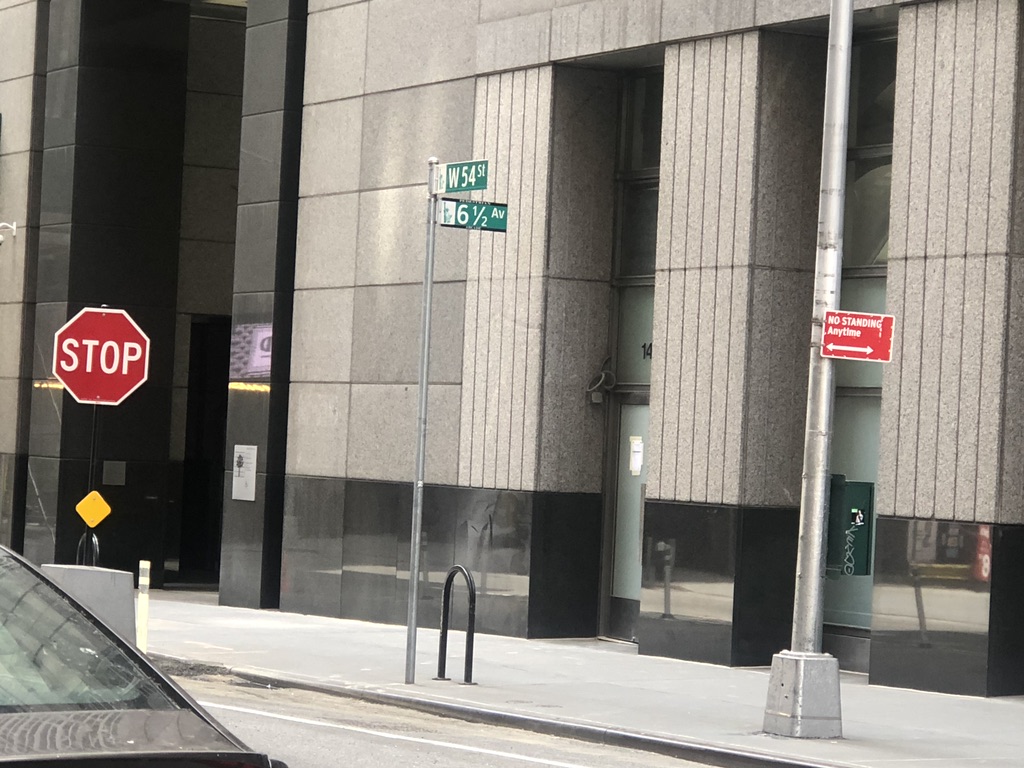
Having never heard about it before, I figured that 6 ½ Avenue was related to the Theater District somehow. According to Wikipedia, and as detailed in other NYC blogs and travel sites, 6 ½ Avenue is a six-block pedestrian walkway from West 51st to West 57th Streets originally created as a “Privately Owned Public Space” and utilized by locals and savvy tourists. It was legitimized in 2012 with the NYC Department of Transportation’s installation of street signs, crosswalks, stop signs, and a traffic light on West 57th. The green street signs describe it as “6 ½ Avenue Pedestrian Arcade,” but since there are so many letters in that name you can only really read it by zooming in very close. So, it is a thing. And apparently, it is the only avenue in NYC with a fractional number. It has that going for it, too. As with most everything in New York, it has its controversies, from drivers missing the midblock stop to the increased traffic to the arcade not being used as planned.2
Curious, I walked its entire length from West 57th south to West 51st to get the full 6 ½ Pedestrian Arcade experience. And while it is not far to continue to either 6th or 7th Avenues, it is convenient to cut through the middle of the block while, for example, bringing your take-out salad back to your office. Each of the walkways is a different experience (a few of which were closed for construction forcing me to walk around the block instead): some were simple hallways, tunnels, or alleys that passed through buildings; some were outdoor arcades with seating.
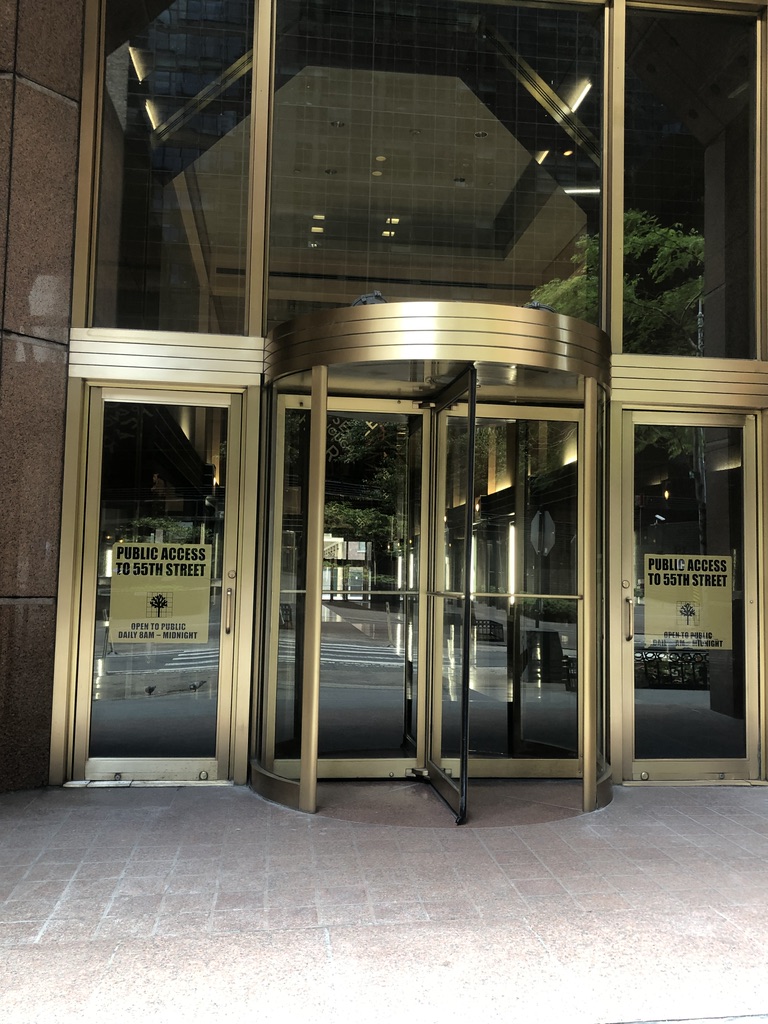
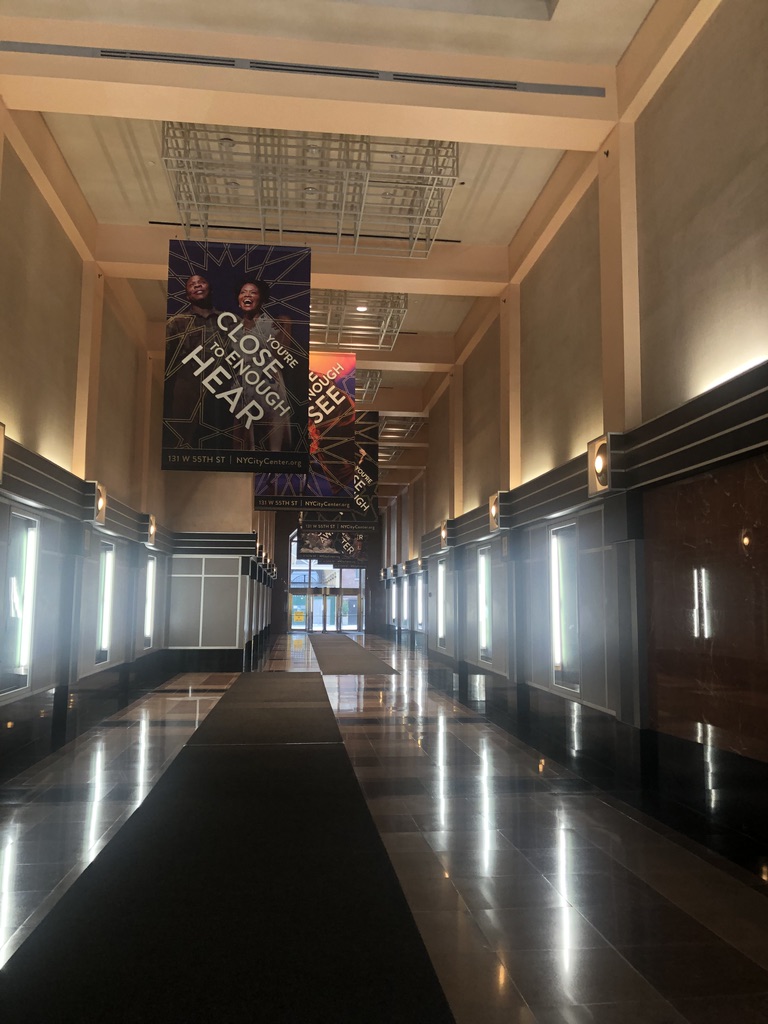
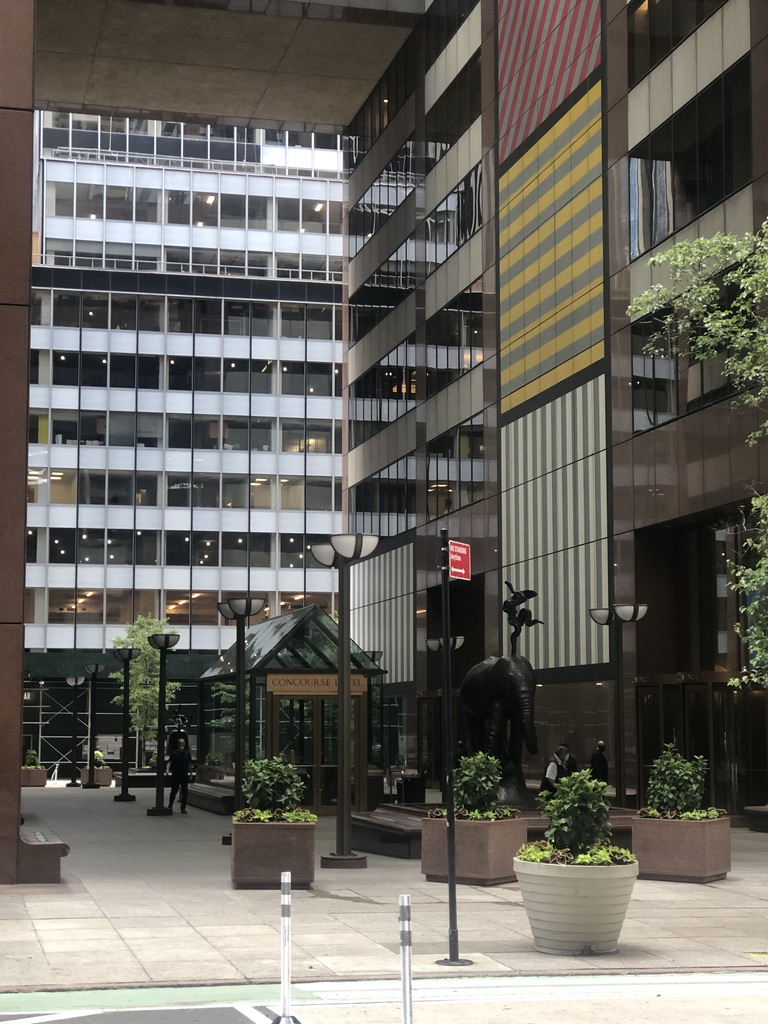
Aside from the convenience of a short cut, using 6 ½ Avenue gave me the feeling of being an insider (finger tapping the side of my nose) with special privileges inside these glass Midtown towers to avoid the general public on the street and without having to deal with security guards or doormen. Its allure—akin to British commoners using public right-of-ways through the grounds of the landed elites—is its granting access to where you normally never would be allowed. For a brief moment, in my mind, I was part of the one percent who work in these buildings for huge corporations, earn end-of-the-year bonuses, and vacation in the Hamptons.
*
To say that Extra Place and 6 ½ Avenue do not exist is an exercise in semantics. Sure, they exist; they are not figments of anyone’s imagination. Instead, they are examples of false advertising: pedestrian walkways posing as roads. Though Extra Place and 6 ½ Avenue were never utilized for vehicular traffic, they exist on maps and have actual signs as if they did. I wonder if Waze and Google Maps has ever sent some hapless driver desperately trying to navigate New York—where you need to use the Force to avoid hitting taxis and bicycles—into one of these streets only to find at the last second that it doesn’t exist. They have directed people have driven into ponds and ditches, after all.
In a city where one needs to walk through its neighborhoods to truly comprehend its history, culture, and mystique, having two places to traverse with minimal threat of getting hit by a car or bicycle is a gift. Take a stroll and check out these two truly New York City locations: one rooted in its history, one a modern convenience for office employees and pedestrians. They are gateways to alternate realities, of sorts, and will make you feel like someone in the know.
______________________________
FOOTNOTES
1 Trapnell, Kelli. “History of NYC Streets: Extra Place in the East Village,” Untapped Cities, October 31, 2012, accessed on May 31, 2020, https://untappedcities.com/2012/10/31/history-of-streets-extra-place-in-the-east-village/; and Walsh, Kevin. “The Evolution of Extra Place,” Huffington Post, November 15, 2009, updated December 6, 2017, accessed on May 31, 2020, https://www.huffpost.com/entry/the-evolution-of-extra-pl_b_288027.
2 “6 ½ Avenue,” Wikipedia, last updated October 13, 2019, accessed May 31, 2020, https://en.wikipedia.org/wiki/6%C2%BD_Avenue; and Spencer, Luke J. “6 ½ Avenue: Manhattan’s Secret Street,” Atlas Obscura, accessed May 31, 2020, https://www.atlasobscura.com/places/6-1-2-avenue-manhattan-s-secret-street.

 The Mysterious Nook